Learning From Disruptors
UNIQUE MARKETING STRATEGIES
Have you heard the term ‘disruptor’ before? A disrupter is a brand or company that shakes up an industry by challenging the status quo.
Sometimes, this means they’re introducing an innovative, one-of-a-kind product. But there are just as many disruptor brands in saturated markets, too, whose products or services may not be entirely revolutionary — but the true disruption comes from how they sell themselves.
We’ve put together a list of the most creative marketing strategies we’ve seen from brands breaking the mould.
HIRE THE HATERS
Highlighting positive reviews and customer testimonials is a common tactic used by almost every brand. But thinking like a disrupter is all about going where everyone else is too afraid to. This means seeing the potential of negative feedback, too.
Here are some Instagram posts from the official account of the Australian grocery delivery company, Milkrun:
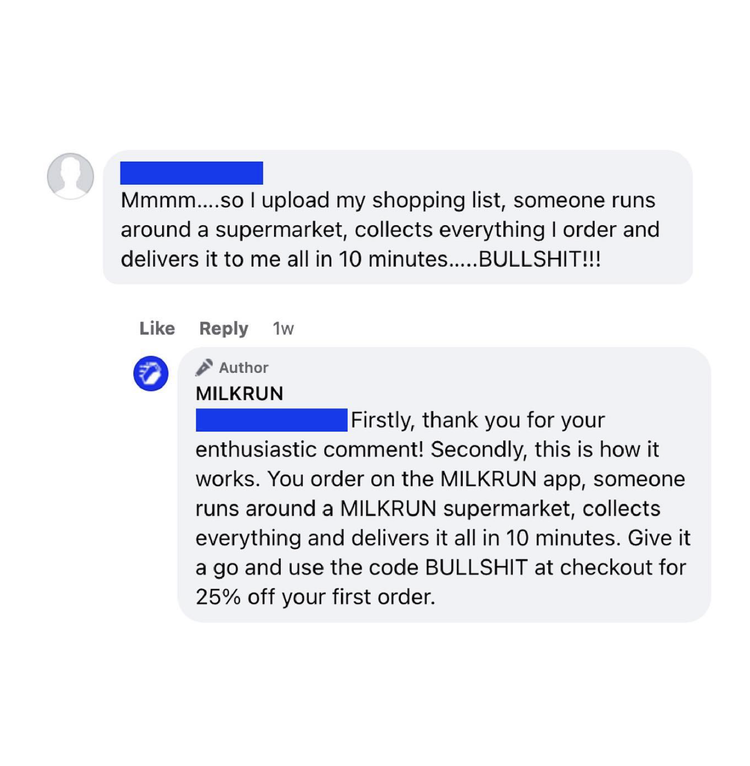
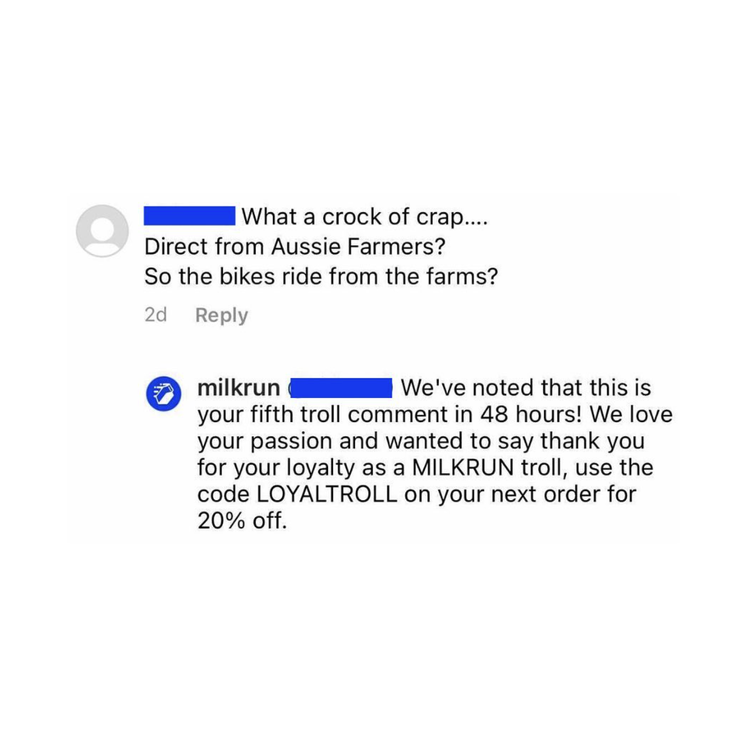
They’ve used customer complaints to achieve three important things:
Showcase some brand personality. They’re not a robotic corporate monolith like big competitors. They can, and will, give trolls a run for their money and give their customers a laugh in the process.
Build authenticity by airing complaints rather than ignoring or hiding them, which is the usual protocol for most brands.
Address customer concerns, and provide clarity where genuine doubt surrounding their services has been expressed.
OPPOSITES ATTRACT
Collaborations are a dime a dozen these days. If you really want to impress people, form a duo that doesn’t make sense. This is a great way to reach new audiences who aren’t generally exposed to your content, and branch out with your image.
Take the Wiggles x Like A Version for example. Like A Version is Triple J’s famous radio segment where musicians cover other songs in their own style. When The Wiggles covered Tame Impala, it went viral overnight. All the ‘9Os kids were suddenly re-engaging with The Wiggles — and the wheels (of the bus) were set into motion for a fully sold-out adults-only Wiggles concert the following year.
Another example is Crocs. They’ve now walked down the runway for the likes of Simone Rocha, Christopher Kane, and Balenciaga. While the standard range retails for under $1OO, the designer collabs can sell for as much as $2OOO.
Aside from the immediate commercial success of a highly priced collab, the flow-on effect is that the classic rubber clog earned mainstream popularity. While they’d always been a practical footwear choice for fishermen and children learning to walk, now Crocs are on everyone’s radar, transitioning from "the world's ugliest shoe" to a streetwear staple.
The strategy is quite simple at its core. Crocs became attached to brands with ‘it’ status, and suddenly everyone thinks they’re ‘it’ too. Nevermind that the shoe design hasn’t really changed; all they needed was the right endorsement.
SAYING IT WITH PICTURES
A picture says a thousand words. Use photography to say ‘we’re different’. Identify the norm in your industry, and do the opposite. Go where you don’t belong.
While luxury hotel chains usually keep a polished profile, the Belmond group proves that low fi can be high-end. Their Instagram showcases a new way to market luxury travel, using a mix of UGC iPhone footage and creative stylized shoots. We’re particularly obsessed with the work they commissioned from Austrian visual artist, Stefanie Moshammer. It’s travel photography meets art — less about documenting the hotel itself and more about capturing the feeling of being there. It sells Belmond as an experience, with a visual identity that stands out compared to your typical luxury travel feed.
Nobody thought pickles were cute until Hot Girl Pickles stuck them on a birthday cake and snuck them in a handbag. We’ve sung their praises in this article where you can also see examples of their sexy photography, usually involving pickles in situations you’d never expect.
Lauren Bamford (something of a product photography legend) also did some super cool things for Mejuri blending jewellery and cheap motel aesthetics.
GETTIN’ CHEEKY WITH IT
Being bad feels good, and can have great results for your brand. Irreverence is powerful for traditionally boring or plain products. Who Gives a Crap is a prime example. The name itself uses some mild curse language to butter up the audience, and their hilarious Instagram content leans into toilet humour to say ‘we don’t sell regular toilet paper, we sell cool toilet paper’.
We also love the Ritual Vitamins Trace Like a Mother campaign, using a spot of implied curse language to flaunt their transparency with ingredients. Nudie Juice also nailed the ‘cheeky without being crass’ balance in this digital campaign pushed across Meta, TikTok and major DOOH placements.